Evening
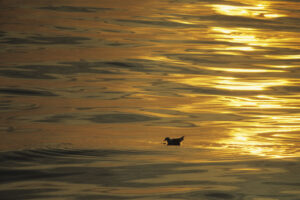
At sunset, a lone black-legged kittiwake (Rissa tridactyla) is feeding in the sea west of Greenland. (Photo copyright © by Kaj Halberg)
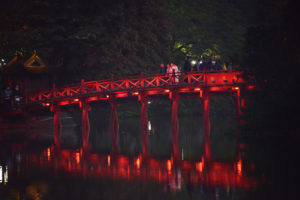
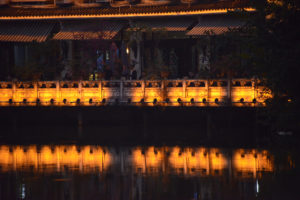
Illuminated wooden bridge, leading out to the Ngoc Son Temple in Hoan Kiem Lake, Hanoi, Vietnam. (Photo copyright © by Kaj Halberg)
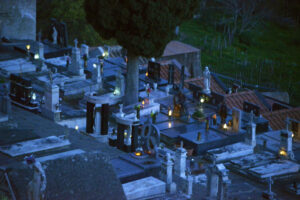
In the evening, electric bulbs are illuminating graves in the cemetery of Roccella Valdemone, Sicily. Other pictures from this graveyard are shown on the page Culture: Graves. (Photos copyright © by Kaj Halberg)
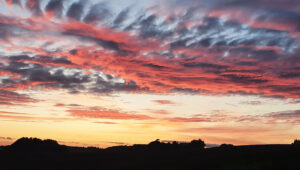
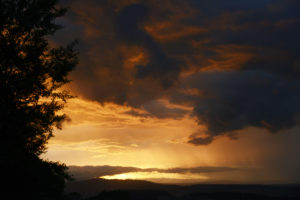
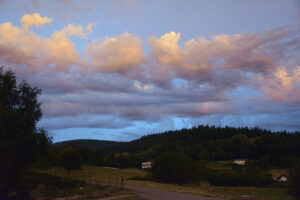
Evening sky, seen from my brother Leif’s home, eastern Jutland, Denmark. (Photo copyright © by Leif Halberg)
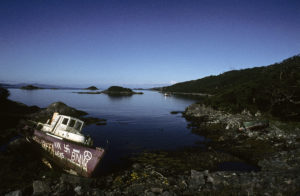
Dusk at Loch nan Uamh, Sound of Arisaig, Scotland. To the left a wrecked boat with grafitti. (Photo copyright © by Kaj Halberg)
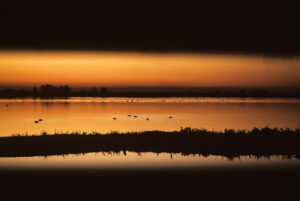
Bright orange evening sky, dark clouds, and ducks, Oostvardersplassen, Flevoland, Holland. (Photo copyright © by Kaj Halberg)
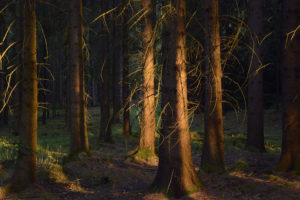
Spruce trees, illuminated by the evening sun, Oberpfälzerwald Nature Park, Bavaria, southern Germany. (Photo copyright © by Kaj Halberg)
It is the evening of the day.
I sit and watch the children play.
Smiling faces I can see,
But not for me.
I sit and watch,
As tears go by.
From the song As Tears Go By (1964), written by Rolling Stones members Mick Jagger and Keith Richards (both born 1943). As the story goes, their manager Andrew Loog Oldham (born 1944) locked them in a kitchen in order to force them to write a song together. Initially, the last line of the verse above was As time goes by, but Oldham insisted that it should be replaced by As tears go by, which greatly improved the poem.
Marianne Faithfull (born 1946) recorded and released the song as a single in 1964, and it became a huge succes. Later, the Rolling Stones recorded their own version.
Dusk in London. (Photo copyright © by Kaj Halberg)
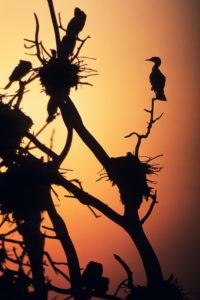
Vorsø is a small nature reserve in Horsens Fjord, Denmark, which has been largely untouched by Man since 1928. This interesting reserve is described in depth on the page Nature Reserve Vorsø.
Colony of great cormorants (Phalacrocorax carbo ssp. sinensis) at sunset, Vorsø. (Photos copyright © by Kaj Halberg)
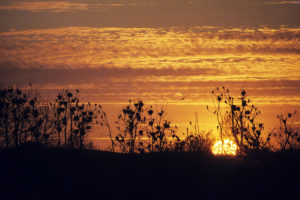
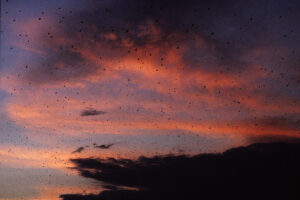
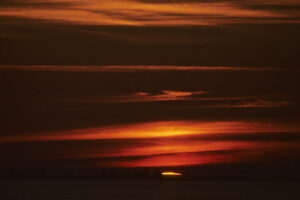
Sunset and clouds, off the west coast of Greenland. (Photo copyright © by Kaj Halberg)
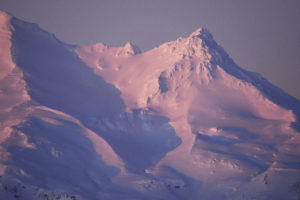
Alpenglow (from German Alpenglühen) is an optical phenomenon, which occurs at sunrise and sunset, when the scattered light from the sun, situated just below the horizon, lights up mountain sides and snow patches, while the foreground is in darkness.
Evening light creates alpenglow on Mt. Ruapehu, with the peaks Tahurangi (2797 m) (left) and Girdlestone Peak (2658 m), Tongariro National Park, New Zealand. (Photo copyright © by Kaj Halberg)
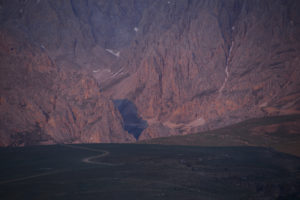
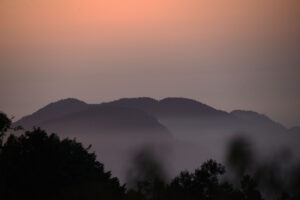
Alpenglow on the Ala Dağları Mountains, near the village of Çukurbağ, Turkey. (Photo copyright © by Kaj Halberg)
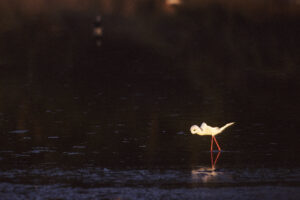
Feeding black-winged stilt (Himantopus himantopus) in evening light, near Jodhpur, Rajasthan, India. This bird is described on several pages on this website, including Animals – Birds: Birds in Taiwan. (Photo copyright © by Kaj Halberg)
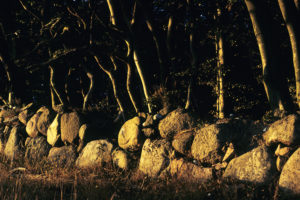
Stone fence in evening light, Møn, Denmark. (Photo copyright © by Kaj Halberg)
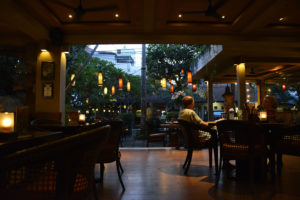
Evening atmosphere in a restaurant, Ubud, Bali, Indonesia. (Photo copyright © by Kaj Halberg)
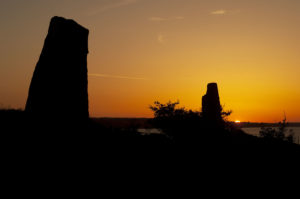
Sunset behind Iron Age standing stones, Stammershalle, Bornholm, Denmark. (Photo copyright © by Kaj Halberg)
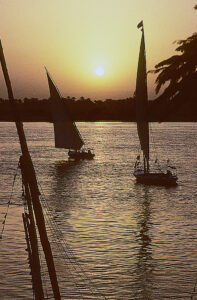
The felucca is a small type of sailboat, which originated in the eastern Mediterranean. Today, it is especially common on the Nile River. This picture shows feluccas at sunset, Luxor. (Photo copyright © by Kaj Halberg)
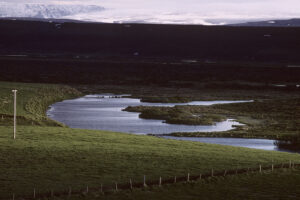
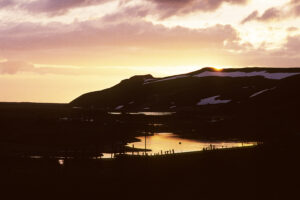
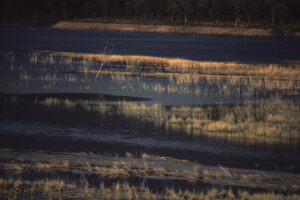
Evening atmosphere, valley of Aðaldal, near Akureyri, northern Iceland. (Photos copyright © by Kaj Halberg)
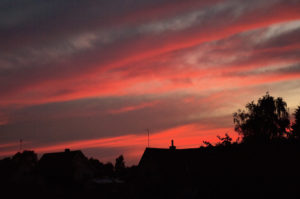
Bright red evening clouds, Funen, Denmark. (Photo copyright © by Kaj Halberg)
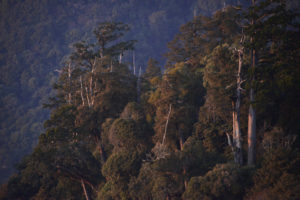
Evening sunshine, illuminating trees in Alishan National Forest, central Taiwan. (Photo copyright © by Kaj Halberg)
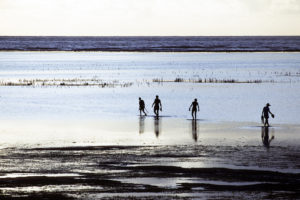
At dusk, people go out to collect sea food at low tide, Bwejuu Beach, Zanzibar, Tanzania. (Photo copyright © by Kaj Halberg)
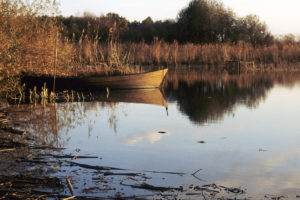
Boat in evening light, Lac de Grand Lieu, Loire Atlantique, France. (Photo copyright © by Kaj Halberg)
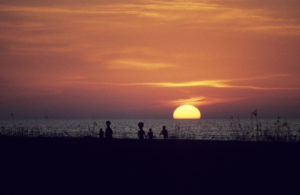
Women and children, carrying burdens at sunset, Caspian Sea, Iran. (Photo copyright © by Kaj Halberg)
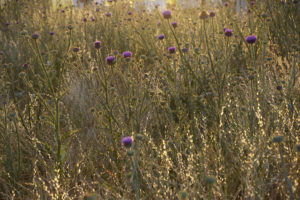
Nodding thistles (Carduus nutans) in evening light, Pamukkale, western Turkey. (Photo copyright © by Kaj Halberg)
An illuminated restaurant is reflected in Hoan Kiem Lake, Hanoi, Vietnam. (Photo copyright © by Kaj Halberg)
Glorious evening sky over Lusaka, the capital of Zambia. (Photo copyright © by Kaj Halberg)
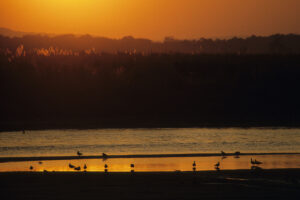
At sunset, ruddy shelducks (Tadorna ferruginea) are resting on sand bars in the Rapti River, southern Nepal. This bird is described on several pages on this website, e.g. Animals – Birds: Birds in the Himalaya. (Photo copyright © by Kaj Halberg)
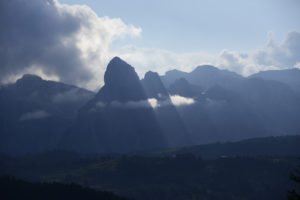
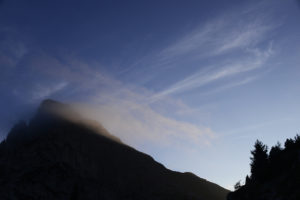
Evening light on mountains, seen from Passo di Valparola (2192 m), Dolomites, Italy. (Photos copyright © by Kaj Halberg)
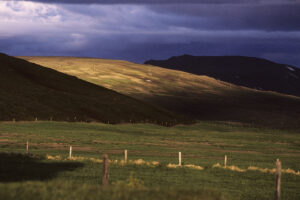
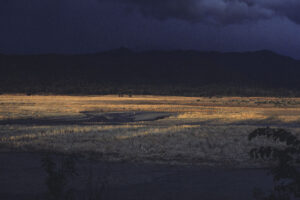
Evening light illuminates a grassy plain in Corbett National Park, Uttarakhand, India. Rain clouds are looming on the horizon. (Photos copyright © by Kaj Halberg)
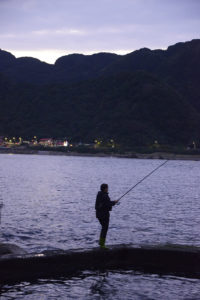
At dusk, this angler tries his luck from the wharf in Longdong, north-eastern Taiwan. (Photo copyright © by Kaj Halberg)
In 1988, I participated in an expedition, the aim of which was to count wintering Palaearctic waders along the Tanzanian coast, described on the page Travel episodes – Tanzania 1988: Experiencing African bureaucracy.
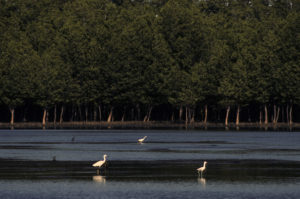
Late afternoon sun, illuminating mangrove with feeding birds, including dimorphic egrets (Egretta dimorpha) and a crab plover (Dromas ardeola), Ras Pombwa, Tanzania. (Photo copyright © by Kaj Halberg)
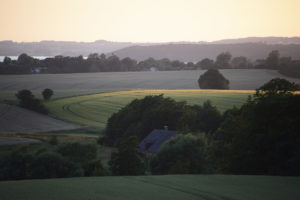
Evening light in an agricultural area near Kalø Vig, Jutland, Denmark. (Photo copyright © by Kaj Halberg)
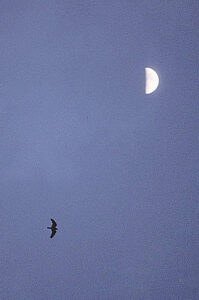
At dusk, a feeding lesser nighthawk (Chordeiles acutipennis) passes under the Moon, Monterrico, Guatemala. This bird is described on the page Animals – Birds: Birds in Costa Rica and Guatemala. (Photo copyright © by Kaj Halberg)
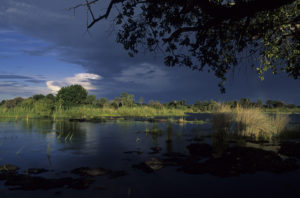
Late in the afternoon, rain clouds gather over the Zambezi River, Zimbabwe. (Photo copyright © by Kaj Halberg)
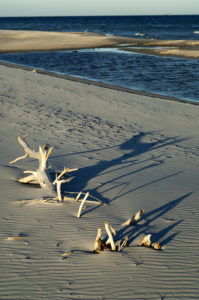
Drift wood, casting long evening shadows on a sandy beach, Dueodde, Bornholm, Denmark. (Photo copyright © by Kaj Halberg)
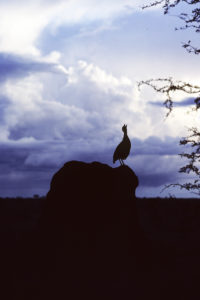
The yellow-necked spurfowl (Pternistis leucoscepus) is a species of francolin, found from Eritrea southwards through Ethiopia, Somalia, and Kenya to northern Tanzania, westwards to the eastern parts of South Sudan and Uganda.
The common name refers to the bright yellow patch of naked skin on the throat, and to the spurs on the back of the legs of the male. It also has naked red skin around the eyes. The specific name is derived from Ancient Greek leukos (‘white’) and skepe (‘covering’), alluding to the white-striped plumage of this species.
At dusk, a yellow-necked spurfowl is calling from a termite mound, Tarangire National Park, Tanzania. (Photo copyright © by Kaj Halberg)
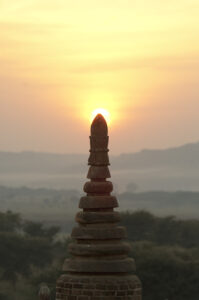
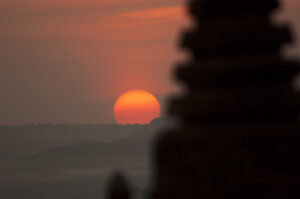
A huge area around the town of Bagan, central Myanmar, is dotted with the remains of c. 2,200 Theravada Buddhist pagodas and temples, of which the major part lie in ruins. During the height of the Bagan Kingdom, between the 11th and 13th Centuries, more than 10,000 temples, pagodas, and monasteries were built in this area.
Sunset behind pagodas, Bagan. (Photos copyright © by Kaj Halberg)
The mallard (Anas platyrhynchos) is very widely distributed across subarctic, temperate, and subtropical areas of North America, Eurasia, and North Africa, southwards to Mexico, Morocco, Egypt, Pakistan, and China, and it has also been introduced to many other places as a hunting object, including South America, New Zealand, Australia, and South Africa.
The drake is a gorgeous bird in breeding plumage, with grey sides, purple breast, and glossy-green head, with a blue shine from certain angles. The female is a uniform speckled brown. Pictures, depicting male and female, may be seen on the page Animals – Animals as servants of Man: Poultry.
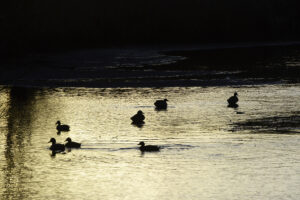
Evening light on a pond with mallards, Funen, Denmark. (Photo copyright © by Kaj Halberg)
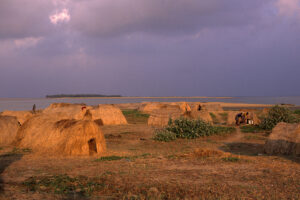
Evening light illuminates grass huts, which are temporary shelters for fishermen, Long Wheeler Island, Bhitarkanika Wildlife Reserve, Maipura River delta, Odisha, India. This area is described in depth on the page Animals – Reptiles and amphibians: Reptiles and amphibians in the Indian Subcontinent. (Photo copyright © by Kaj Halberg)
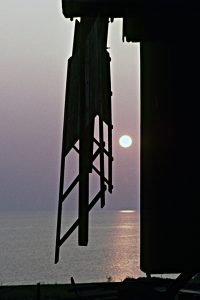
In the 1800s, about 2,000 wooden windmills were found on the Swedish island of Öland, but during the 1900s, many went into decay and were torn down. However, no less than about 355 have been preserved, forming a characteristic feature on the island.
Sunset behind a wooden windmill, Albrunna, Öland. (Photo copyright © by Kaj Halberg)
Midnight sun is a phenomenon found north of the Arctic Circle and south of the Antarctic Circle. In the northernmost and southernmost areas of these regions, the sun is in the sky for 24 hours about 60 days in the summer time, and gradually fewer days as you move from the poles towards the circles.
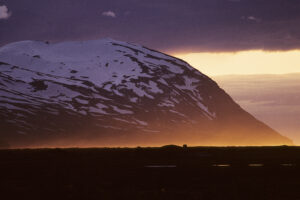
Midnight sun and Kinnarfjöll Mountain (830 m), Aðaldal, near Akureyri, northern Iceland. (Photos copyright © by Kaj Halberg)
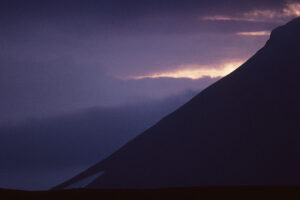
Midnight sun and Jörundur Mountain (591 m), near Reykjahlið, northern Iceland. (Photo copyright © by Kaj Halberg)
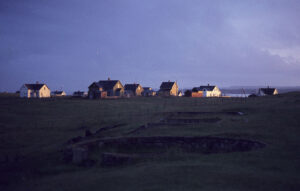
Village of Ekkerøy in midnight sun, Varanger Peninsula, Norway. (Photo copyright © by Kaj Halberg)
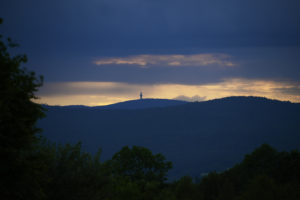
Evening clouds, Steinwald Nature Park, southern Germany. (Photos copyright © by Kaj Halberg)
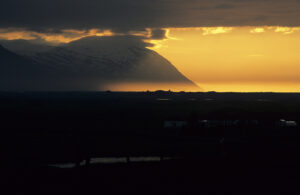
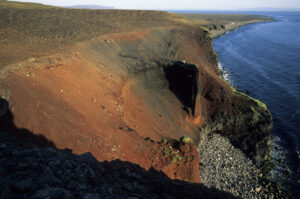
Evening light on Rauðanupur (‘Red Cliff’), northern Iceland. (Photo copyright © by Kaj Halberg)
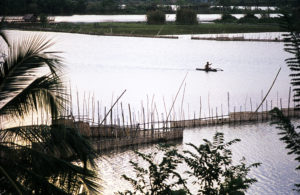
Bolgoda is a large lake in south-western Sri Lanka. Towards evening, a Sinhalese paddles his canoe past fish traps, made from split bamboo stems, which have been tied together to form mats. My adventures at this wetland are related on the page Travel episodes – Sri Lanka 1976: Among alcohol brewers. (Photo copyright © by Kaj Halberg)
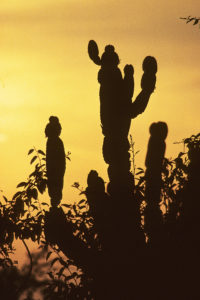
Euphorbia candelabrum is a succulent, tree-like species of spurge, usually around 10 m tall, but occasionally to 20 m. It is endemic to eastern Africa along the Great Rift Valley, and to the countries around the African Horn. The specific name alludes to its shape, which resembles a candelabrum, giving rise to the popular name candelabra tree. It grows in dry wooded grasslands and on rocky slopes, up to elevations around 2,200 m.
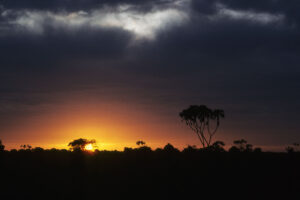
Yellow evening sky behind Euphorbia candelabrum, Queen Elizabeth National Park, Uganda. (Photo copyright © by Kaj Halberg)
Evening atmosphere, Roskilde Fjord, Denmark. (Photo copyright © by Kaj Halberg)
Evening light on eroded rock formations around the Hill Ruins of Great Zimbabwe, Zimbabwe. (Photo copyright © by Kaj Halberg)
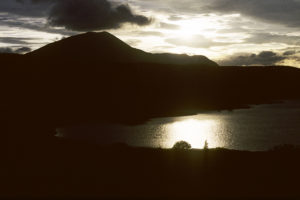
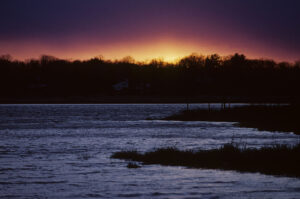
Dusk at a lake, Scotland. (Photo copyright © by Kaj Halberg)
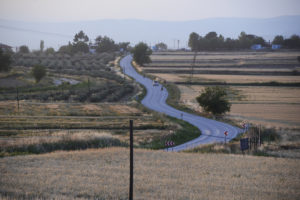
Rural road in evening light, Pamukkale, western Turkey. (Photo copyright © by Kaj Halberg)
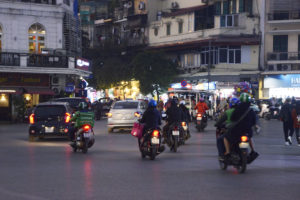
Evening traffic, Hanoi, Vietnam. (Photo copyright © by Kaj Halberg)
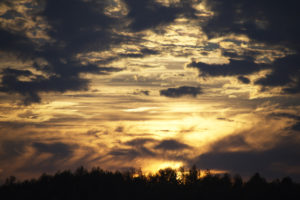
Evening sky, Aaker Plantation, Bornholm, Denmark. (Photo copyright © by Kaj Halberg)
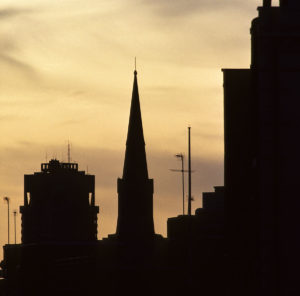
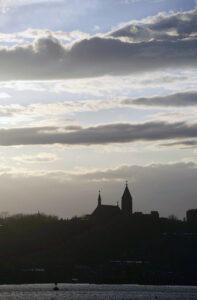
Evening silhouette of Saint Dominique Church, Portland, Maine, United States. (Photo copyright © by Kaj Halberg)
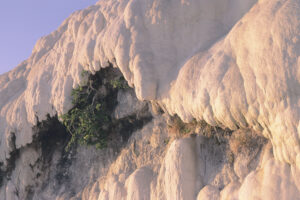
Evening sun adds a yellow tinge to deposited calcium bicarbonate, in which common figs (Ficus carica) have sprouted, Pamukkale Terraces, western Turkey. (Photo copyright © by Kaj Halberg)
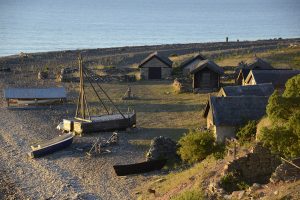
Bruddesta, Öland, Sweden, in evening light. This abandoned fishing village has been preserved as a museum, including huts, boats, and winches, the purpose of which was to haul the boats on land. (Photo copyright © by Kaj Halberg)
Evening fog, Dasyueshan National Forest, central Taiwan. (Photos copyright © by Kaj Halberg)
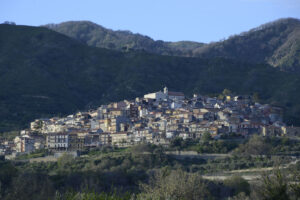
Late afternoon sunshine illuminates the city of Mojo Alcantara, Sicily. (Photo copyright © by Kaj Halberg)
At dusk, cumulus clouds gather above the Bangweulu Swamps, a huge wetland in northern Zambia. This interesting area is described on the page Countries and places: Bangweulu – where water meets the sky. (Photo copyright © by Kaj Halberg)
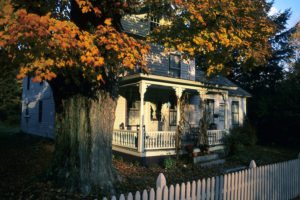
Sugar maple (Acer saccharum), illuminated by the evening sun, North Egremont, Massachusetts, United States. A large number of pictures, depicting the gorgeous autumn foliage of this species, and numerous other trees, are shown on the page Autumn. (Photo copyright © by Kaj Halberg)
At dusk, the sky above Alishan National Forest, central Taiwan, assumes a delicate shade of orange. (Photo copyright © by Kaj Halberg)
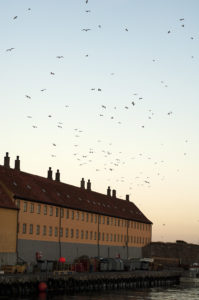
On their way to their night roost, herring gulls (Larus argentatus) are soaring over Christiansø, Bornholm, Denmark. This species and many other gulls are described on the page Animals – Birds: Gulls, terns and skimmers. (Photo copyright © by Kaj Halberg)
The commonest African fruit-bat is the straw-coloured fruit-bat (Eidolon helvum), which lives in sub-Saharan savannas and forest, southwards to South Africa, and also in the south-western part of the Arabian Peninsula.
At dusk, great numbers of straw-coloured fruit-bats leave their day roost in Kasanka National Park, Zambia, in search of ripe fruit. (Photo copyright © by Kaj Halberg)
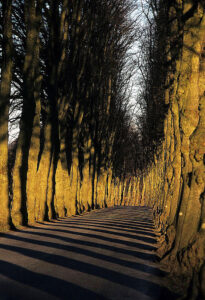
Evening light on rows of common linden (Tilia x europaea), Jutland, Denmark. Linden trees are described on the page Plants: Plants in folklore and poetry. (Photo copyright © by Kaj Halberg)
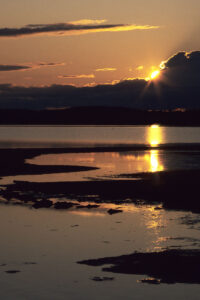
Sunset and clouds, Kapelludden, Öland, Sweden. (Photo copyright © by Kaj Halberg)
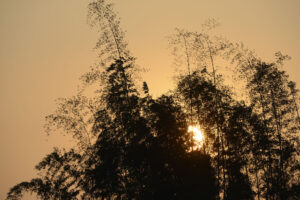
Bamboo at sunset, Yujing, southern Taiwan. (Photo copyright © by Kaj Halberg)
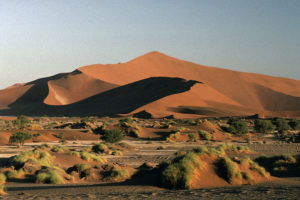
Sand dunes in late afternoon light, Sossusvlei, Namibia. The fantastic nature in this fascinating country is described on the page Countries and places: Namibia – a desert country. (Photo copyright © by Kaj Halberg)
Evening clouds, Bühlertal, Black Forest, southern Germany. (Photo copyright © by Kaj Halberg)
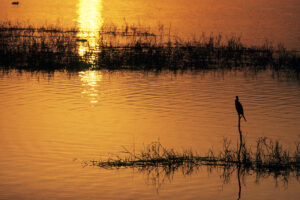
Sunset and little cormorant (Microcarbo niger), Haleji Wildlife Sanctuary, Sindh, Pakistan. This bird is described on the page Animals – Birds: Birds in the Indian Subcontinent. (Photo copyright © by Kaj Halberg)
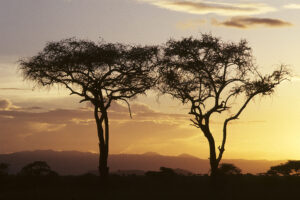
The umbrella acacia (Vachellia tortilis), previously known as Acacia tortilis, was named due to the shape of the crown, which is often broad and curved like an umbrella. It is a very widespread and common tree, to 20 m tall, distributed in the entire northern Africa, southwards to Senegal and Chad, and in a broad belt from Egypt southwards through eastern Africa to South Africa and southern Namibia. It also occurs in the Middle East, from Syria southwards through the entire Arabian Peninsula.
Previously, it was thought that 4 acacia species occurred in this vast area, but research has shown that they are all subspecies of V. tortilis. (Source: fao.org/3/Q2934E)
Other species of acacia are described on the page In praise of the colour yellow.
Sunset behind umbrella acacias, Tarangire National Park, northern Tanzania. (Photos copyright © by Kaj Halberg)
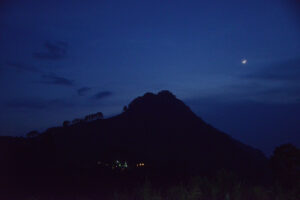
Night sky, Bandipur, Nepal. (Photo copyright © by Kaj Halberg)
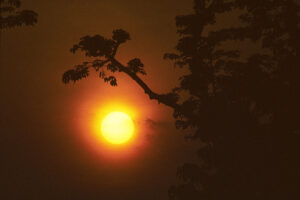
Mist creates a reddish halo around the setting sun, Sauraha, southern Nepal. (Photo copyright © by Kaj Halberg)
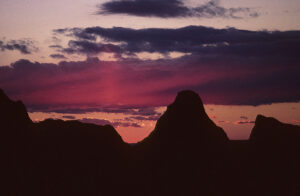
Eroded rocks at sunset, Badlands National Park, South Dakota, United States. (Photo copyright © by Kaj Halberg)
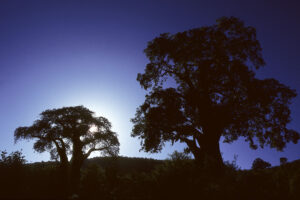
The majestic baobab (Adansonia digitata) dominates large areas of savanna in sub-Saharan Africa. It is the most widespread among the nine species in this genus, of which six are native to Madagascar, two to mainland Africa and the Arabian Peninsula, and one to Australia.
Folk names of this species include dead-rat tree (from the sausage-like fruit, hanging in a long stalk – the rat’s tail), monkey-bread tree (the fruit is edible), and upside-down tree (the sparse branches resemble roots). The name baobab is derived from the Arabic būħibāb, meaning ‘the father of many seeds’. The generic name refers to French botanist and explorer Michel Adanson (1727-1806), who was the first European to observe the species during an expedition to Senegal.
Moon, rising behind baobabs, Lake Manyara National Park, Tanzania. (Photo copyright © by Kaj Halberg)
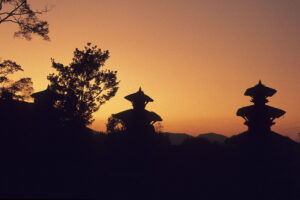
The pagoda style of Nepal, which is inspired by the shape of the Himalayan fir tree (Abies spectabilis), is the oldest pagoda style in Asia. These architectural beauties are multi-tiered Hindu temples with multiple curved roofs.
Sunset behind pagodas on Durbar Square, Kathmandu, Nepal. (Photo copyright © by Kaj Halberg)
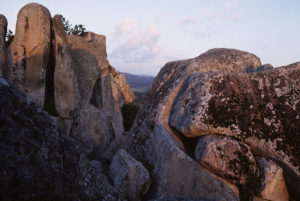
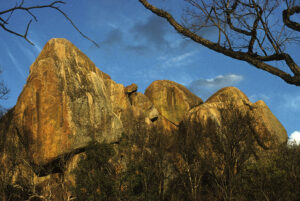
Eroded rocks in evening light, Matobo National Park, Zimbabwe. (Photo copyright © by Kaj Halberg)
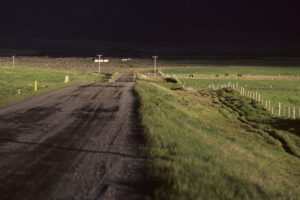
Dark evening clouds, Bighorn Mountains, Wyoming, United States. (Photo copyright © by Kaj Halberg)
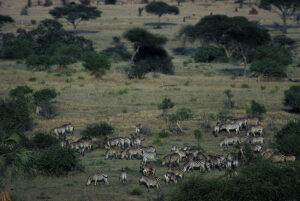
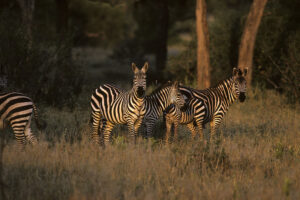
Three species of zebra live in Africa. The commonest and most widespread is the plains zebra (Equus quagga, previously known as E. burchelli). It was formerly far more widespread, but today the range is fragmented, with scattered populations of 5-6 subspecies found from southern Ethiopia southwards through eastern Africa to northern Namibia and north-eastern South Africa.
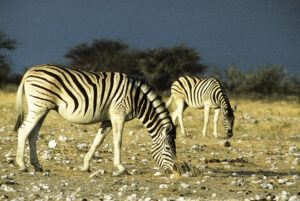
The plains zebra in Namibia was previously regarded as a distinct subspecies, antiquorum. However, recent studies have revealed that it is similar to Burchell’s zebra, subspecies burchelli, which was once considered extinct. As subspecies burchelli was described prior to antiquorum, the former name takes precedence. Thus, the plains zebras of Namibia are now called E. quagga ssp. burchelli. Following the extermination of the quagga, ssp. quagga, in the late 1800s, Burchell’s zebra is now the least striped surviving subspecies.
Late afternoon sun, illuminating a herd of grazing plains zebras, ssp. boehmi, Tarangire National Park, Tanzania. (Photos copyright © by Kaj Halberg)
Black rain clouds darken the horizon, as grazing Burchell’s zebras are illuminated by the evening sun, Etosha National Park, Namibia. (Photo copyright © by Kaj Halberg)
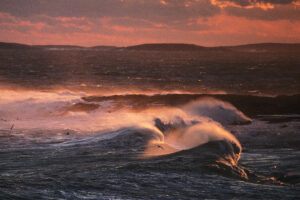
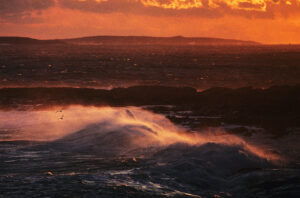
Rough sea. – At dusk, a sea-going gale blows off foam from the top of the waves, Pemaquid, Maine, United States. The gulls seem unaffected by the fierce wind. (Photos copyright © by Kaj Halberg)
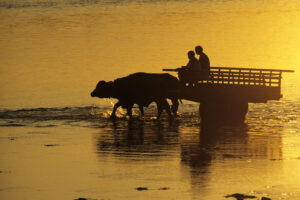
At sunset, a buffalo cart crosses the Rapti River, near Sauraha, southern Nepal. The water buffalo is described on the page Animals: Animals as servants of Man. (Photo copyright © by Kaj Halberg)
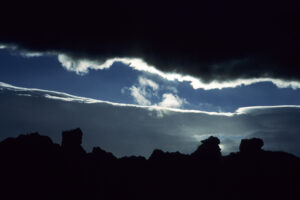
Evening atmosphere with clouds and lava formations, Aðaldal Valley, northern Iceland. (Photo copyright © by Kaj Halberg)
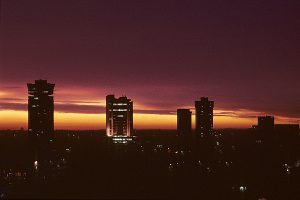
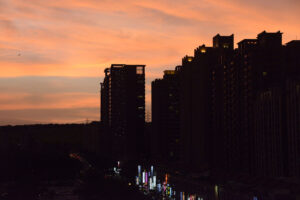
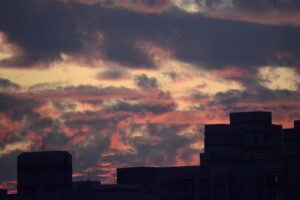
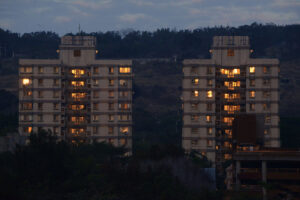
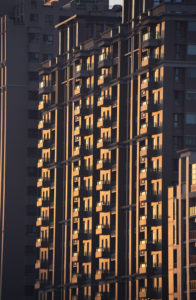
Evening atmosphere around skyscrapers, Taichung, Taiwan. The bird to the left in the upper picture is a house swift (Apus nipalensis). This species often feeds at dusk. (Photos copyright © by Kaj Halberg)
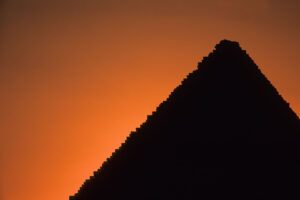
An interesting theory regarding the practical usage of the famous Giza pyramids in Egypt was proposed by my late friend John Burke in his book Seed of Knowledge, Stone of Plenty: Understanding the Lost Technology of the Ancient Megalith-Builders. The entire book is presented on this website (see Book).
Evening sky behind Menkaure (Mycerinus), the smallest of the Giza pyramids, constructed around 2490-2472 B.C. (Photo copyright © by Kaj Halberg)
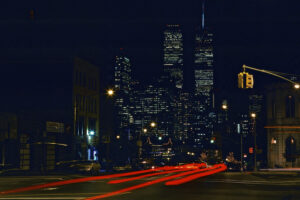
The following four pictures show evening atmosphere in and around Manhattan, New York City.
This picture from 1998 shows the twin towers of the World Trade Center, which were destroyed by terrorists on September 11, 2001. (Photo copyright © by Kaj Halberg)
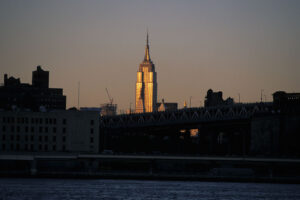
Empire State Building. (Photo copyright © by Kaj Halberg)
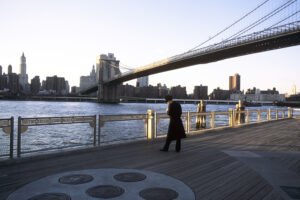
An orthodox Jew recites from the Torah beneath Brooklyn Bridge. This famous bridge, 1,825 m long and with a main span of 486 m, was the first steel-wire suspension bridge to be constructed, between 1869 and 1883. (Photo copyright © by Kaj Halberg)
Sunset behind the Statue of Liberty, cranes, and the Bayonne Bridge, an arch bridge, which was completed in 1931. It spans the tidal strait Kill Van Kull, connecting Staten Island with the city of Bayonne, New Jersey. (Photo copyright © by Kaj Halberg)
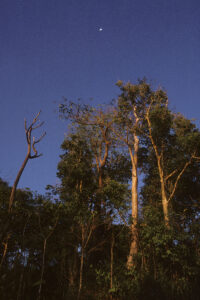
Rainforest in evening light, Chidiyatappu, Andaman Islands, India. (Photo copyright © by Kaj Halberg)
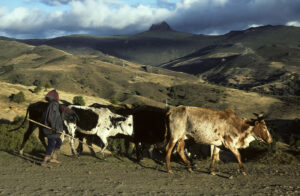
Towards evening, in the highlands west of Dinsho, Bale Mountains, Ethiopia, a young Oromo herder drives the family cattle back to his home. (Photo copyright © by Kaj Halberg)
Clouds are illuminated, as the sun sets behind the Baltic Sea, near Vivesholm, Gotland, Sweden. (Photo copyright © by Kaj Halberg)
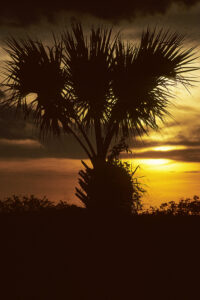
The Mexican palmetto (Sabal mexicana), in the United States also known as Rio Grande palmetto or Texas palmetto, is distributed from extreme southern Texas southwards along both seashores to Nicaragua. It is widespread and common in Mexico and Guatemala. This palm may reach a height of 18 m, with a trunk diameter up to 30 cm. The fan-shaped leaves, to 1.8 m across, are situated at the end of a spineless stalk, to 1.2 m long.
A close relative, the cabbage palmetto (S. palmetto) is described on the page Dawn.
Sunset behind a Mexican palmetto, Monterrico, Guatemala. (Photo copyright © by Kaj Halberg)
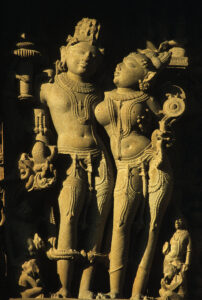
Evening light illuminates a sculpture, depicting Hindu royalty, Devi Jagadamba Temple, Khajuraho, Madhya Pradesh, India. (Photo copyright © by Kaj Halberg)
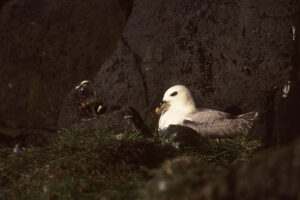
The northern fulmar (Fulmarus glacialis) is an abundant seabird found in subarctic and northern temperate regions of the Atlantic and Pacific Oceans. Two colour morphs of this bird exist, a pale one with white head and body, and grey wings and tail, and a dark morph, which is uniformly grey.
It belongs to the order Procellariiformes, whose members are characterized by having tubular nasal passages on the upper mandible, to which a gland is attached. When feeding, these birds invariably swallow a lot of sea water, and surplus salt in their body is excreted through this gland.
The name fulmar is derived from Old Norse full (‘foul’), alluding to a foul-smelling stomach oil that the bird regurgitates when in danger, and mar (‘gull’), referring to its gull-like appearance.
Incubating northern fulmar in evening light, Rauðanupur (‘Red Cliff’), northern Iceland. (Photo copyright © by Kaj Halberg)
Evening sky in December, Mill Neck Creek, Long Island, New York. (Photo copyright © by Kaj Halberg)
The doum palm (Hyphaene thebaica) differs from most other palms through its branched trunk, with a fan of leaves at the end of each branch. This species is distributed across the African Sahel zone, and in East Africa, from northern Tanzania northwards to Egypt, and also in Israel, Jordan, and the Arabian Peninsula.
Sunset on a savanna with doum palms, Meru National Park, Kenya. (Photo copyright © by Kaj Halberg)
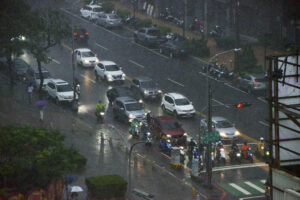
Evening traffic in rainy weather, Taichung, Taiwan. (Photo copyright © by Kaj Halberg)
A large number of pictures, depicting sunsets, are shown on the page Nature: Clouds.
(Uploaded February 2020)
(Latest update April 2024)